
Washer not draining? Find the blockage
Pull the washer's hose out of the standpipe and pour about a quart into the house drain. If it backs up, the problem is your plumbing, not the machine. That one test saves many Honolulu owners a wasted repair visit.
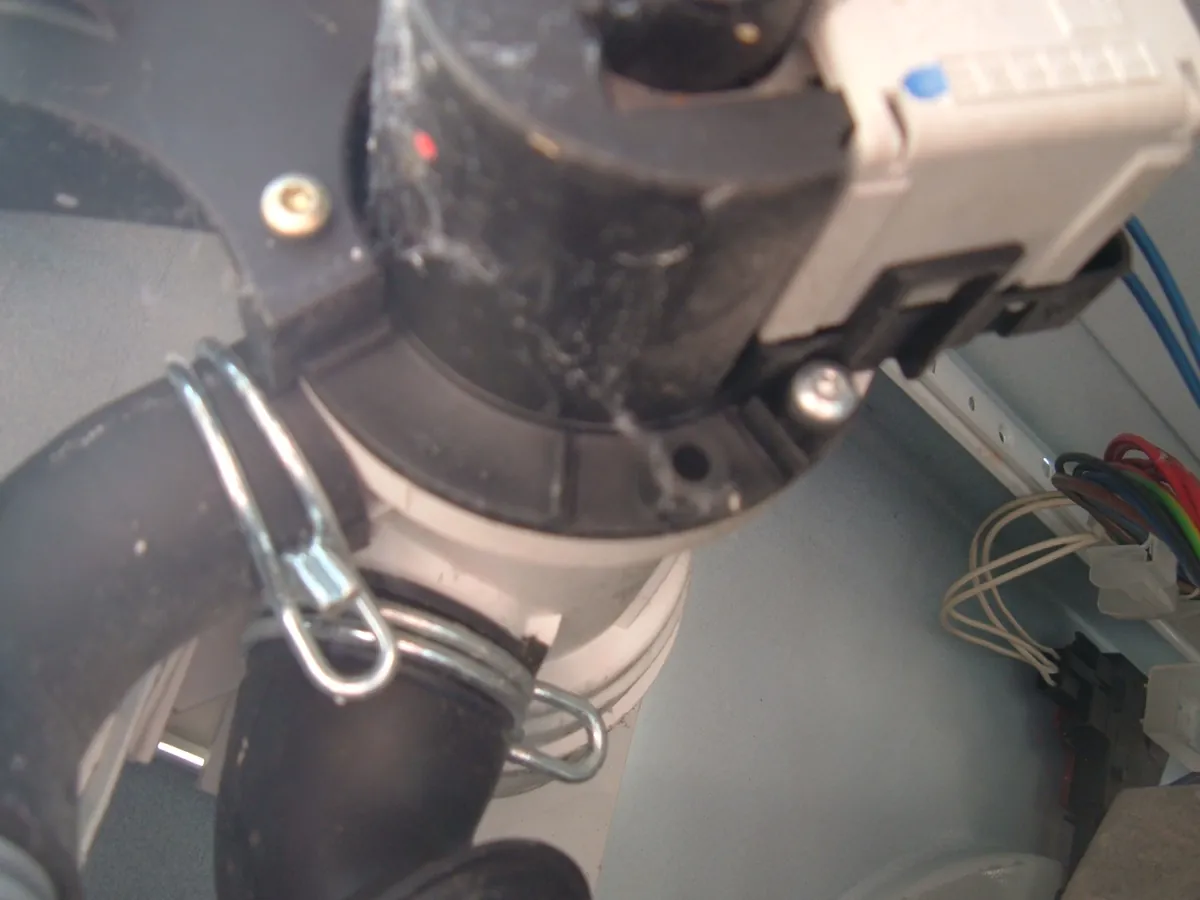
Why won't my washing machine drain?
Give it a few minutes before anything else: many GE washers pause up to 3 minutes between stages, and turning a manual dial ahead can skip the pump-out. If the water stays, the causes usually run in this order. A kinked or crushed drain hose. A front-load pump filter packed with coins, hair or small items, cleaned through the access door low on the front. A house drain that cannot take the flow, which the quart test shows. A hose pushed too deep into the standpipe, taped in, or lifted too high. Last comes a tub full of water that only hums, which means the pump has failed or jammed and a technician needs to see it.
What happens when a technician checks the drain?
Power off
On a Honolulu visit the washer is unplugged before any panel comes off, and the standing water is let out under control so the drain path can be checked.
Listen
Any error code is read, then the pump is run. Silent, humming and running all point to different faults.
Drain path
Pump filter, hose and standpipe are checked against the maker's limits, because a hose set too low siphons and one set too high strains the pump.
Pump
If the path is clear and the pump only hums, it is replaced with a part matched to the model, and a full drain and spin runs before the technician leaves your Honolulu home.
Drain height: where the makers disagree
Set the hose wrong and the washer either siphons or strains. The makers publish different limits, so your own manual settles it.
| Maker guide | Lowest standpipe top | Highest drain point | Hose into standpipe | Note |
|---|---|---|---|---|
| Whirlpool front-load | 30 inches | 96 inches | 4.5 inches at most | Never tape the hose in; the air gap breaks the siphon |
| Whirlpool top-load (one page) | 39 inches | 96 inches | Not stated there | Higher floor than the front-load page |
| GE full-size | 30 inches | 8 feet | Not stated there | Compacts and portables: 5 feet |
| Samsung | Not stated there | Not stated there | 6 inches at most | Deeper can let dirty water siphon back |
Which cause is holding the water in?
| Cause | How you can tell | Owner check or technician job |
|---|---|---|
| Pause between stages | Tub full right after a stage ends, no error showing | Owner check: wait up to 3 minutes and leave the dial alone |
| Kinked or crushed hose | Washer recently pushed back; hose folded behind it | Owner check: straighten it and keep the lift within the maker's limit |
| Clogged pump filter | Front-loader drains slowly, shakes or smells; small items missing from pockets | Owner check: unplug, then clean the filter through the lower access door |
| House drain blocked | A quart poured into the standpipe backs up | Plumbing job, not a washer repair |
| Slow pump-out | 2015 or newer GE top-loader flashes Rinse or shows Po | Owner check for a clog in the hose, filter or drain |
| Pump failed or jammed | Tub full, a hum, nothing moves | Technician job |