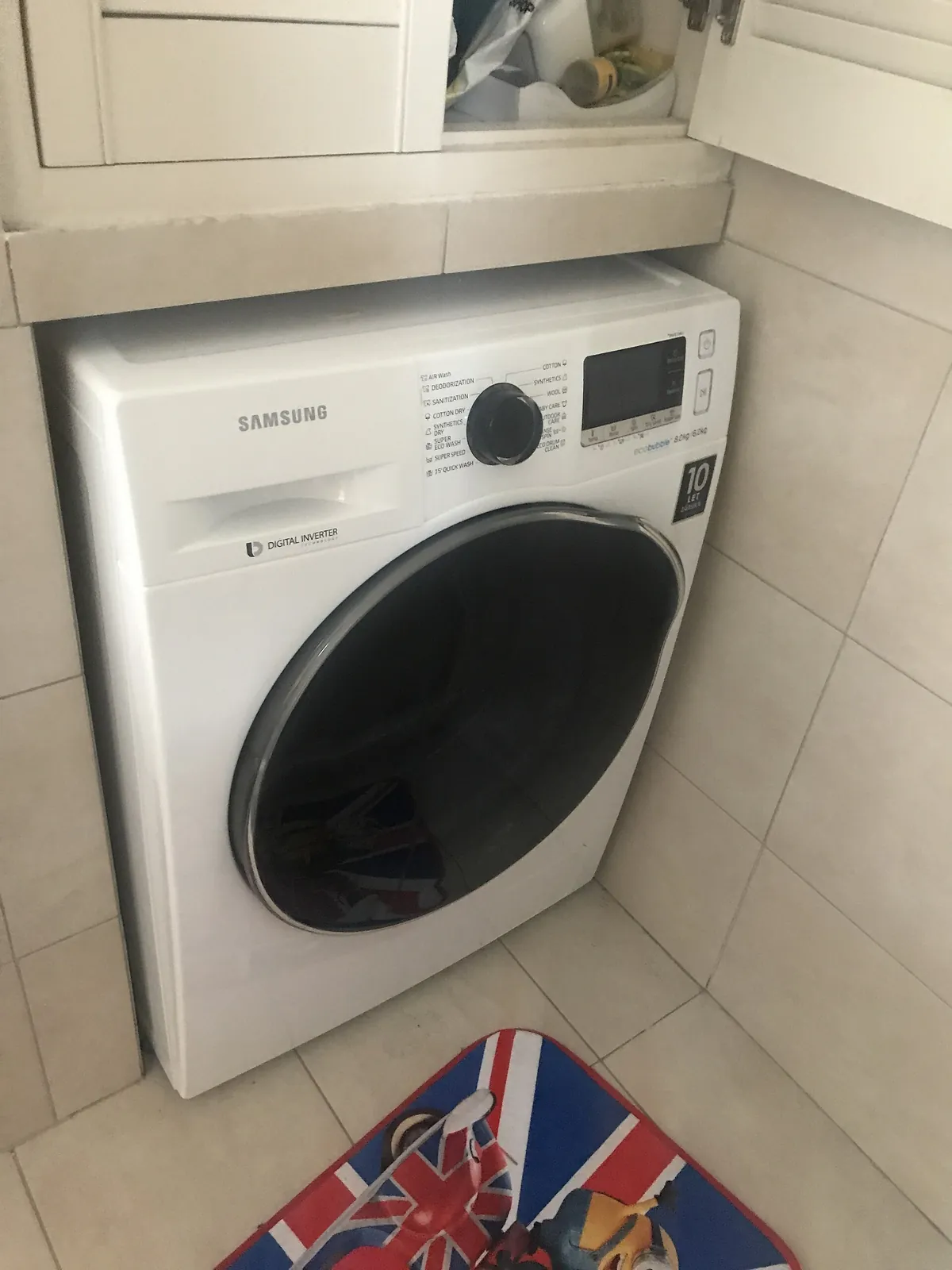
Washer shaking: steady it first
The further a washer's legs are screwed out, the more it shakes, GE says. Keep them as short as the floor allows and lock all four. That is the first fix to try in any Honolulu laundry room.
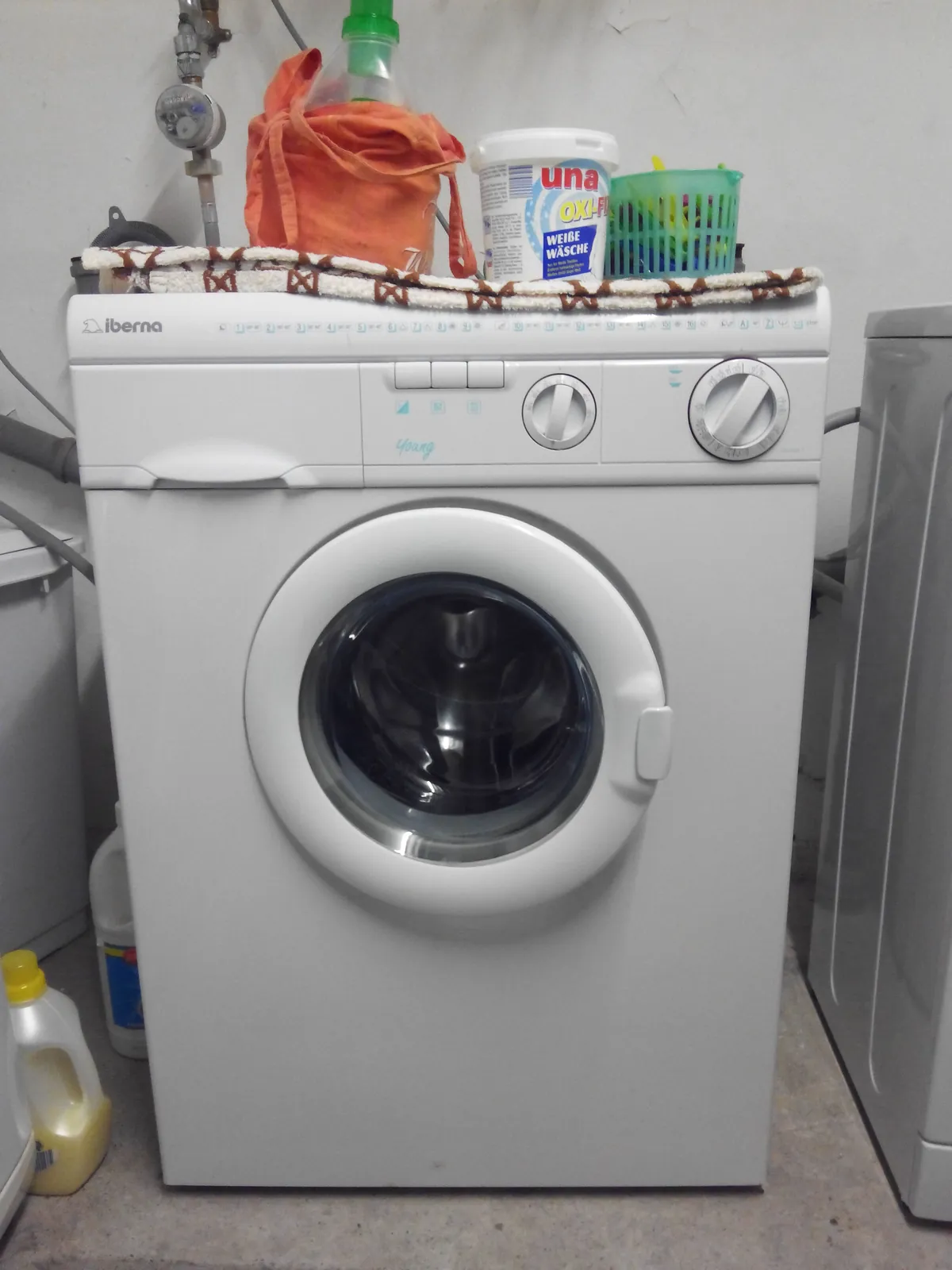
Why is my washer shaking so much?
On a new or just-moved washer, the likeliest reason it is shaking is shipping restraints left in. Top-loaders ship with a rod, foam block or cardboard cone under the tub, front-loaders with bolts and braces through the back, and a drum that will not move when pushed still has them. Legs come next: all four on the floor, locked, and as short as possible. Grip the top and rock it front to back, then side to side, to find the loose corner. Then run an empty rinse and spin. Calm with nothing inside means the load was lopsided. A clogged front-load pump filter or a springy floor adds to it. Shaking after all that needs a technician.
Six kinds of washer movement, sorted
Some motion is designed in. Some is a warning. Watch one spin from start to finish and match what you see and hear to these.
Brine slosh
GE top-loaders carry a sealed ring partly filled with salt water. Hearing it slosh is normal.
Small sideways shift
In an off-balance spin, a GE front-loader may move up to 1/4 inch. That much is by design.
Violent from day one
A brand-new or freshly moved machine that bangs hard usually still has its shipping restraints in.
Walks across the floor
A foot off the floor or an unlocked leg lets the washer creep with each spin.
Only with some loads
Quiet empty, wild with a rug or bedding. The load is bunching on one side of the drum.
Shake plus slow drain
On a front-loader, a packed pump filter leaves water in the drum and the spin goes lopsided.
How does a technician find the source of the shake?
Restraints
On any washer that is new or just moved in Honolulu, the rod, foam, cone or rear bolts are looked for first.
Rock test
The cabinet is gripped and rocked both ways. Legs are shortened, set on the floor and locked against the body.
Empty spin
An empty rinse and spin shows whether the machine or the load is at fault. On front-loaders the pump filter is cleared too.
Inside
If the shake survives those steps, the cabinet comes open with the power off and the worn part is identified before any quote is given.
What sets the washer rocking?
| Cause | How you can tell | Owner check or technician job |
|---|---|---|
| Shipping restraints in | New or moved machine; front-load drum will not budge when pushed | Owner fix: remove them per the manual; on GE rod models it pulls out at the lower right |
| Legs long or loose | Rocks when you grip the top; creeps across the floor | Owner fix: shorten, level and lock all four |
| Lopsided load | Calm on an empty rinse and spin | Owner fix: spread the load; balance one heavy item with towels |
| Clogged pump filter | Front-loader drains slowly and shakes | Owner fix: unplug, then clean it behind the lower front panel |
| Weak floor | The floor flexes underfoot near the machine | Carpentry question, not a washer repair |
| Fault inside the cabinet | Still shakes after every check above | Technician job |
Why some washers shake harder in older Honolulu homes
Plenty of older Honolulu houses, plantation-style single-wall homes among them, stand on wood posts over stone or concrete footings, so the laundry sits on a raised wood floor rather than a slab. Whirlpool says a weak floor makes washer vibration worse. On a floor like that, short locked legs and a balanced load matter more, and a corner that flexes underfoot needs a carpenter, not a new washer.